/KRONE%20-%20Cases%20and%20stories/Sassnitzgade-10.jpg?width=2000&height=1333&name=Sassnitzgade-10.jpg)
/KRONE%20-%20Cases%20and%20stories/_R0A8784.jpg?width=2000&name=_R0A8784.jpg)
/KRONE%20-%20D%C3%B8re/Krone%20fotos-5-1.jpg?width=1606&height=1051&name=Krone%20fotos-5-1.jpg)
/KRONE%20-%20Cases%20and%20stories/8072-8645.jpg?width=2000&name=8072-8645.jpg)
/Krone%20-%20brochurer/Forside%20Lookbook%20-%20til%20website.jpg?width=541&height=349&name=Forside%20Lookbook%20-%20til%20website.jpg)
/KRONE%20-%20Diverse/_DSC9168%20-%20besk%C3%A5ret-1.jpg?width=2000&name=_DSC9168%20-%20besk%C3%A5ret-1.jpg)


FAQ
Here you'll find answers to the most common questions that come up when thinking about windows and doors.
Energy and insulation
What is the U-value of a window?
The U-valueindicates how well a window insulates. The lower the U-value, the less heat loss and better energy efficiency. The requirements in the building regulations mean that windows today typically have to stay below certain U-valuesanddoorswithout glassmust have a maximum of 0.8 W/m²K, whiledoorswith glassmust have 1.0 W/m²K. Measured on reference size 123x218 cm.
What does Eref mean?
The Eref value shows the window system's energy balance - the ratio between the heat the window absorbs from the sun and the heat that escapes again. Windows in Denmark must currently fulfil the requirement Eref ≥ 0 kWh/m² per year, which ensures positive or neutral energy contributions.
What do the different energy values mean?
- U value = insulation performance from the inside out
- G value = solar energy gain through the glass
- Eref = the total energy balance of a standard openable 123x148 cm window
These values are used to ensure that windows meet today's requirements for energy consumption and indoor climate.
What is a warm edge?
A warm edge is the spacer profile between the panes in a thermal pane, made of a material with low thermal conductivity. It reduces thermal bridges and minimises the risk of internal condensation and reduces energy loss.
Glass and safety
- Float glass is ordinary glass
- Tempered glass is heated glass that is cooled in a flash
- Laminated glass is two layers of glass joined together with plastic foil
- All glass types can be energy coated.
When to use safety glass?
Safety glass is required where there is an increased risk of injury, e.g:
- Glass sections that go close to the floor
- Doors with large glass panes
- In places where there is a risk of falling through or level differences, laminated glass should be used (holds together in case of breakage) or, for other risks, tempered glass (granulates into harmless pieces).
What is the difference between laminated and tempered glass?
- Tempered glass: Very strong and granulates into small harmless pieces when broken. May have small waves in the surface from tempering.
- Laminated glass: The glass stays together in the event of breakage and protects against falling through and makes break-ins more difficult. The laminated film blocks a large amount of UV radiation to prevent fading and is also more sound insulating than float and tempered glass.
How does fogging occur on the inside of the windscreen?
Internal fogging is caused by high humidity in the room and too low a temperature on the inside of the window. Regular ventilation and proper heating will eliminate the problem.
How does fogging occur on the outside of the windscreen?
External fogging only occurs on 3-layer energy windows when they are so well insulated that the outer glass is cooled at night and the humidity that rises with the morning temperature condenses on the glass. This is a sign of good insulation, but can be minimised with a larger overhang.
Materials and construction
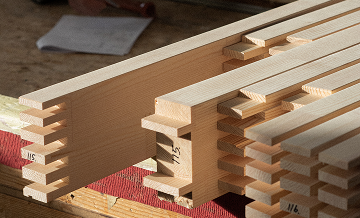
What is finger jointed wood?
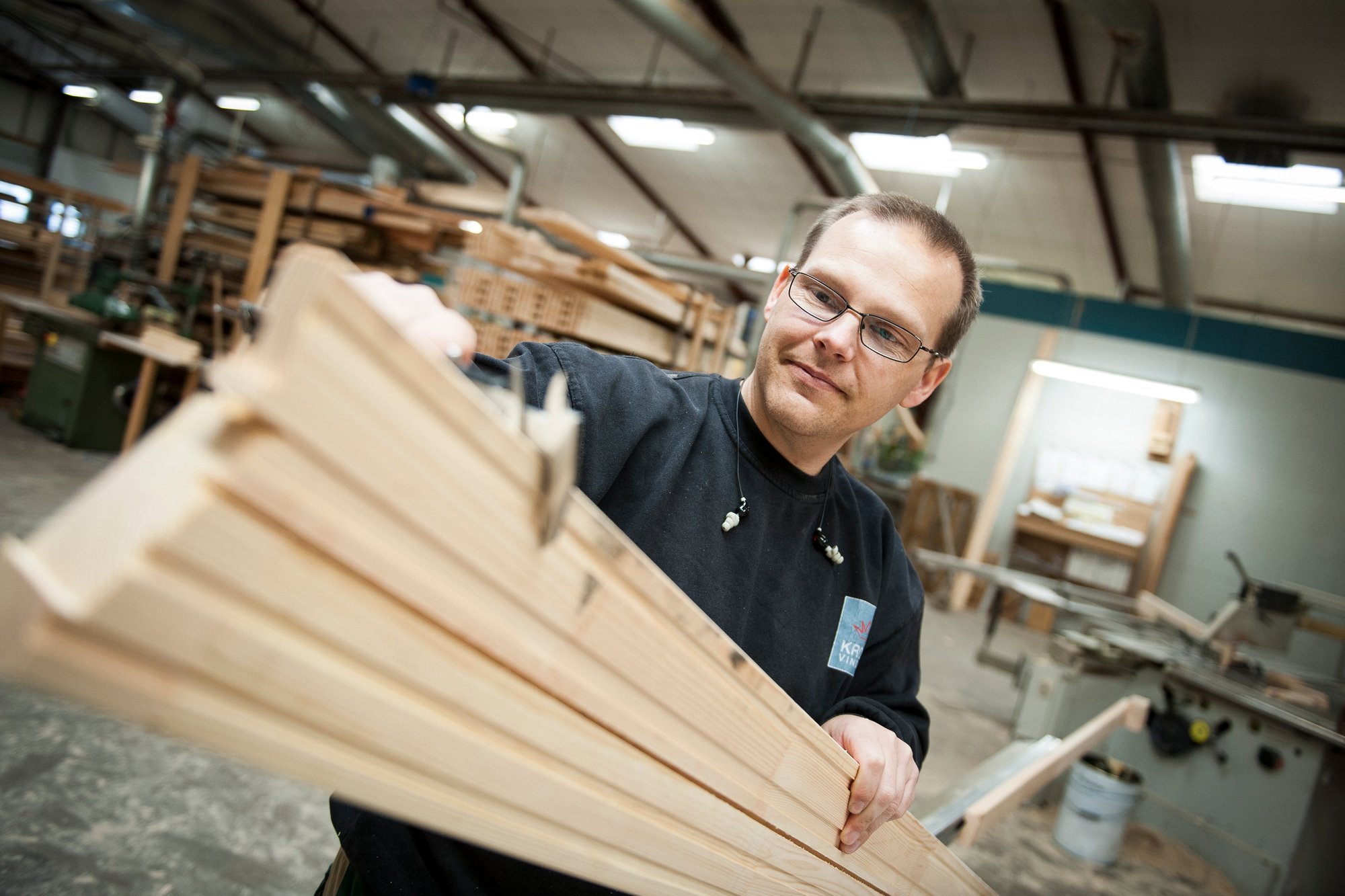
Finger jointing is a method of gluing short pieces of wood together into long, stable pieces. This results in a strong and dimensionally stable frame and better utilisation of the raw wood.
What is heartwood?
Heartwood is the naturally most durable part of the tree trunk with high resistance to moisture. Most manufacturers use more heartwood to achieve longevity.
Water-based paint - what does it mean?
Water-based paint is used in modern window production because it:
- is work environment friendly
- provides a flexible surface that does not crack
- has good weather resistance
However, it still requires proper maintenance on the exterior side.
Features and operation
What is the difference between top-hung, top guided and top hung windows?
Top guided: Frame opens downwards from the top, slides out in brackets at the bottom - good for ventilation.
- Top-hung: Hinges at the top, the pane opens outwards - often used in basements.
- Top swing: The frame can be both opened and turned completely round for easy plastering from the inside
- Tilt/swivel: The frame can be tilted approx. 8 cm in at the top or opened fully sideways inwards.
Why are there vents in some windows?
Vents make a small contribution to home ventilation to reduce moisture that can otherwise cause mould and poor air quality.
What is an escape hatch?
A rescue opening is an opening in the window that fulfils escape route requirements. It must be large enough for the fire brigade to rescue people. The requirement is for living spaces without a door to the outside.
What is a base plate groove/light groove?
A groove in the window frame that allows base plates, lights or frames to be correctly fitted directly into the frame.
Regulations and certifications
What does DVC stand for?
DVC stands for Danish Window Certification. It is a guarantee that windows and doors comply with requirements for quality, durability and function, which is ensured by annual inspections of production and value chains.
What does CE marking mean?
The CE mark ensures that the product fulfils the EU requirements for performance, safety and traceability that are part of the Construction Regulation.
What is 2 ECO?
2Øko is an approved coating system from the various paint manufacturers that are subject to the window industry requiring DVV certification.
Maintenance
How do I maintain my windows and doors?
- Cleaning and lubricating fittings 1-2 times a year
- Check and clean sealing strips
- Wash and inspect the surface
- Repair exterior paint early to avoid moisture build-up and subsequent peeling.
Wooden windows typically require more maintenance than wood/aluminium, but have fewer thermal bridges.
See also the User Guide.
Do you still need help?
You are always welcome to send us an email or contact us by phone if you have further questions or need clarification.
/Krone-web-Fotograf_Per_Bille-20230228DSC06440.jpg?width=1920&height=1280&name=Krone-web-Fotograf_Per_Bille-20230228DSC06440.jpg)
/KRONE%20-%20Cases%20and%20stories/5S3A5330.jpg)