Glass and fillings
Glass is not just glass. The choice of glass type has a major impact on the comfort, function and appearance of your building. At KRONE, we offer a range of speciality glasses, each designed to meet specific needs - whether you want more peace and quiet indoors, better energy savings, extra security, beautiful light or reduction of solar heat gain. And if you want to replace the glass with a fille
Our glass types
Here you can get a quick overview of our most popular glass types - and find the solution that best suits your project.
As standard, we use triple glazing with two energy coatings to further lower the U-value. All our glass comes with a warm edge in black as standard.
Optimise your building with energy glazing that insulates three times better than standard double glazing. The glazing has significantly better insulating properties than standard double glazing. The space between the panes is filled with argon gas instead of air and a thin silver coating on one pane reflects heat back into the building.
Solar glass helps keep the sun's warm rays out without darkening the room. This maintains a good indoor climate and prevents overheating inside. Solar glass is available in different degrees, but we normally supply 70/35, which keeps out 65% of the sun's heat - compared to 47% with ordinary glass.
Sound-absorbing double glazing reduces noise from outside the building. The dampening effect is achieved by using glass of different thicknesses. The outer glass does not oscillate in the same way as the inner glass, which means that sound penetrates the pane very poorly. By laminating both panes of glass, additional sound reduction is achieved.
Our latest generation of wood/aluminium windows have a sound reduction of up to 43 decibels with three layers of glass. They are very often used near airports and railways.
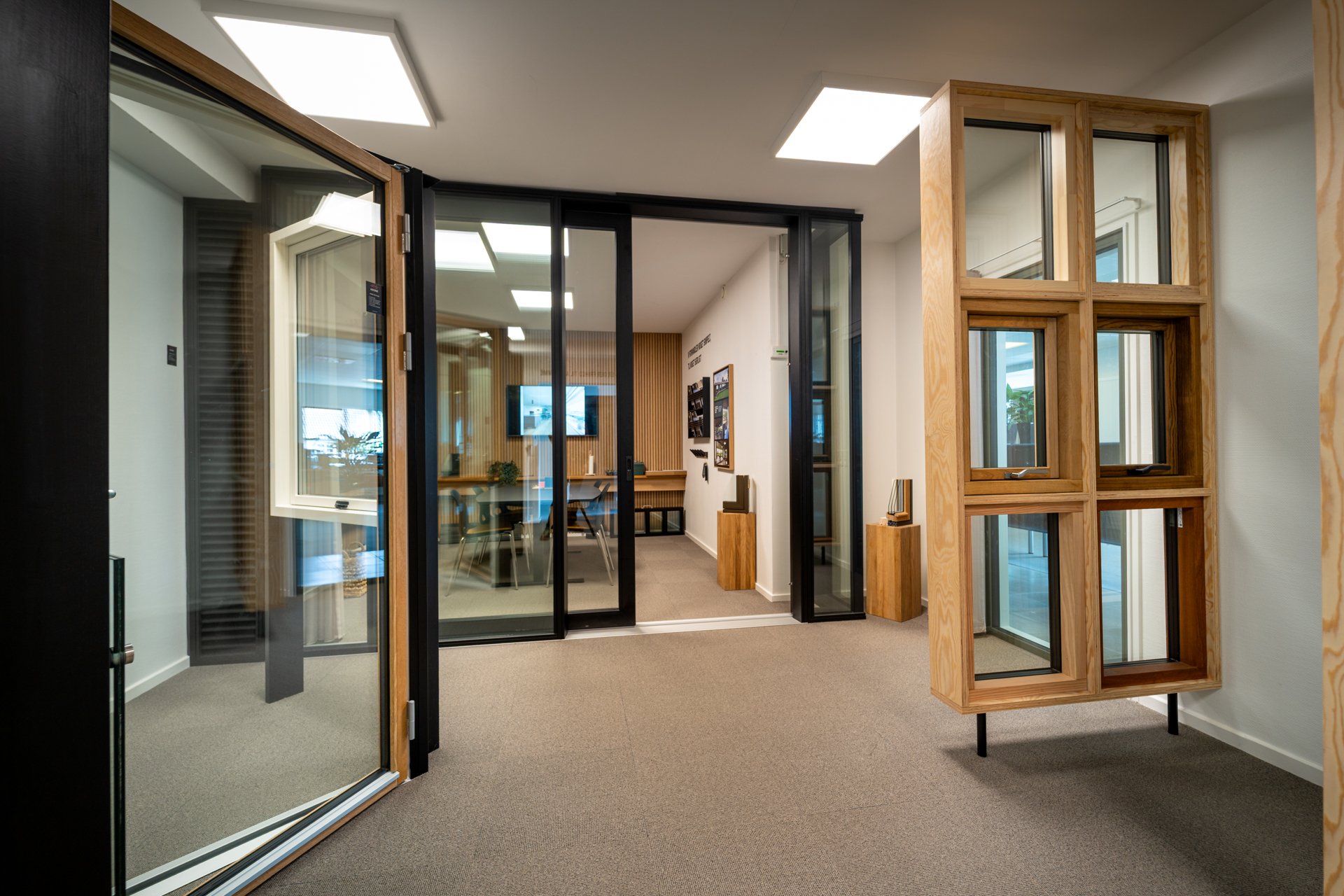
We offer facade and patio doors with many different infills, so you will always be able to find a design that matches your wishes.
Safety glass consists of either tempered or laminated glass in different combinations and thicknesses.
Tempered glass is created in a production process using heat that hardens the glass. Upon impact, the glass will shatter into thousands of pieces that do not cut, avoiding injury with large cuts.
Laminated safety glass works by laminating two panes of glass together. If the pane shatters, the glass will stick to the laminate.

See a selection of the ornament glasses we offer below.
Understand the glass values
When choosing windows, the properties of the glass play an important role in terms of comfort, light and energy consumption. Here's a simple explanation of the three most important values: U-value, LT-value and g-value.
The U-valueindicateshow well the windowretains heat.
It is measured in W/m²K and applies here:
The lower the U-value, the better the insulation and the less heat loss.
This definition follows current standards and descriptions of heat transmission through glass.
The LTvalue is expressed as a percentage and shows how much daylight enters through the window.
A high number means more natural light in the room.
This is consistent with the glass industry's descriptions of light transmittance.
The g-valueindicates how much of the sun's energy (heat) enters through the glass.
High g-value= more free solar heat.
Low g-value= less risk of overheating in summer.
This explanation follows the definition of total solar energy transmittance in DS/EN 410 and glass facts.